Engine Diagnostics Grays | Professional Vehicle Diagnostic Specialists
That little orange engine symbol just lit up on your dashboard, and now you're stuck wondering if it's something serious or nothing at all. Do you pull over? Keep driving? Book the car in and hope it's not going to cost a fortune.
That little orange engine symbol just lit up on your dashboard, and now you're stuck wondering if it's something serious or nothing at all. Do you pull over? Keep driving? Book the car in and hope it's not going to cost a fortune?
Here's the honest answer: you don't know until someone actually checks. And guessing wrong, either by panicking over a loose fuel cap or ignoring a genuine misfire, is exactly how small problems turn into expensive ones.
That's what proper engine diagnostics Grays drivers can rely on is for. At Vogue Fix My Motor, we use professional-grade diagnostic equipment to tell you precisely what's happening under the bonnet, not a vague guess based on the symptoms you describe over the phone.
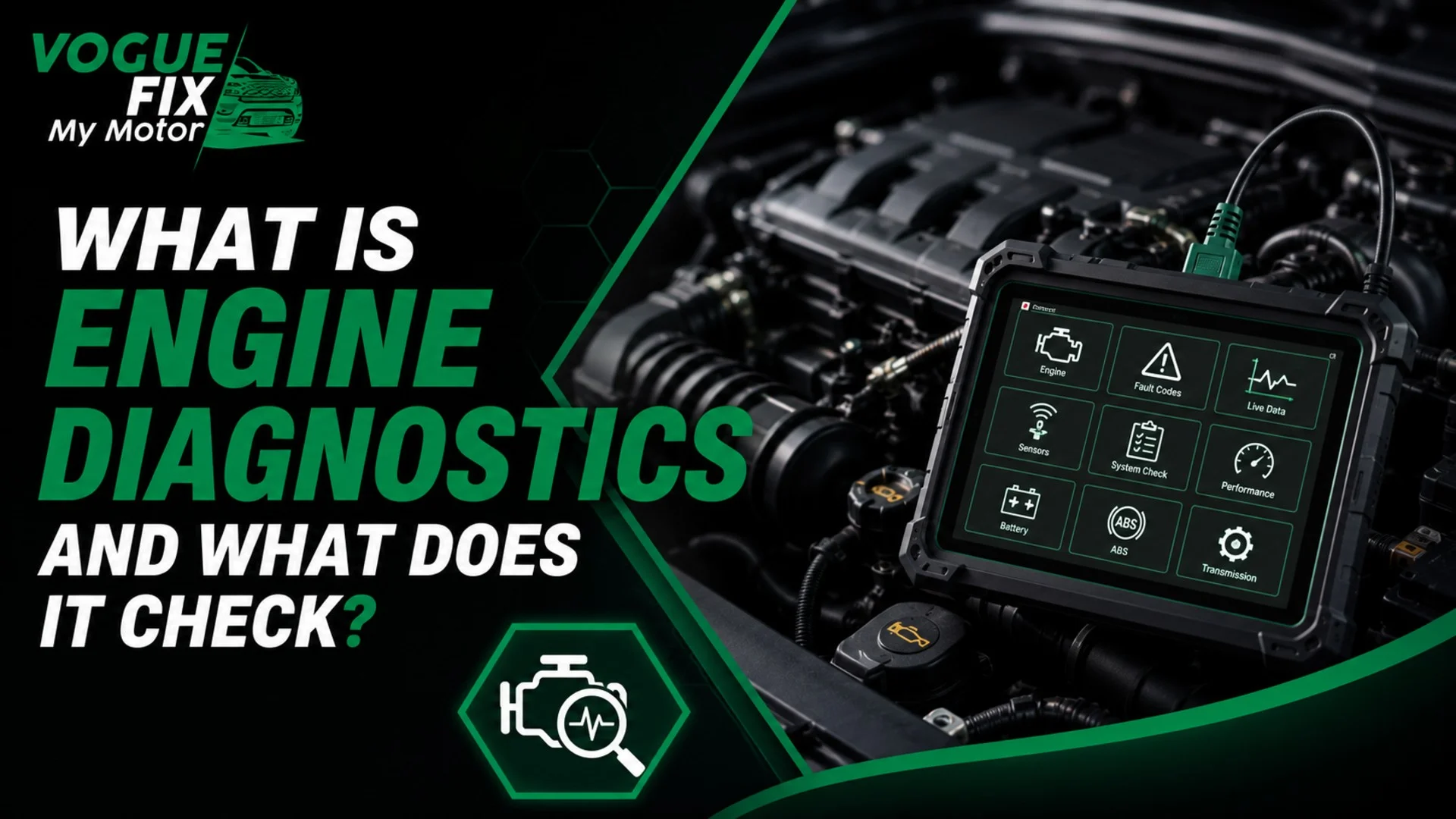
What Is Engine Diagnostics and What Does It Check?
Engine diagnostics is the process of connecting your vehicle's onboard computer, the ECU (Engine Control Unit), to specialist diagnostic equipment to read exactly what's going wrong, and often why.
Modern cars are covered in sensors that constantly monitor everything from fuel mixture to emissions output. When something falls outside normal range, the ECU logs a fault code and, in most cases, triggers a warning light. A diagnostic scan reads those codes directly, cutting out the guesswork that comes with a purely visual inspection.
How ECU & OBD-II Diagnostics Work
Every vehicle built after 2001 (petrol) or 2004 (diesel) in the UK is fitted with an OBD-II port, a standardised connection point that lets diagnostic equipment communicate directly with the car's electronics. Plug in a diagnostic scanner, and it pulls data straight from the ECU.
Fault Code Reading & Live Data Analysis
A basic scan retrieves stored diagnostic trouble codes (DTCs), short alphanumeric codes that point to a specific system or component. But a code alone rarely tells the whole story. That's why our technicians go further with live data analysis, watching real-time readings from sensors while the engine runs, which often reveals the actual root cause rather than just the symptom the ECU flagged.
For example, a fault code might point to the mass airflow sensor. Live data can show whether the sensor itself has failed or whether it's reacting correctly to an unrelated problem elsewhere in the intake system. That distinction is the difference between replacing a £40 part and replacing the wrong one entirely.
What Parts of the Vehicle Can Be Diagnostically Tested?
Diagnostics isn't limited to the engine alone. A full diagnostic scan can assess several interconnected systems:
Engine management system — fuel mixture, ignition timing, idle control
Sensor faults are among the most common reasons for a check engine light. We routinely test the oxygen sensor, crankshaft position sensor, camshaft position sensor, and mass airflow sensor, each one critical to how efficiently your engine runs. Ignition coils and spark plugs are checked too, since misfires often trace back to a failing coil rather than the engine itself.
Turbocharger, DPF & EGR Diagnostics
Turbocharged and diesel vehicles bring their own common fault patterns. Turbo diagnostics assess boost pressure and wastegate function, while DPF diagnostics check whether the diesel particulate filter is blocked or regenerating correctly. A struggling EGR valve is another frequent culprit behind rough idling and reduced power, one our diagnostic equipment identifies quickly.
Not every warning light is engine-related. A weak battery or failing alternator can trigger dashboard warnings that look engine-related but aren't. We test battery voltage under load and check the charging system output, because a car that struggles to start isn't always an engine problem, sometimes it's electrical, and treating it as the wrong issue wastes time and money.
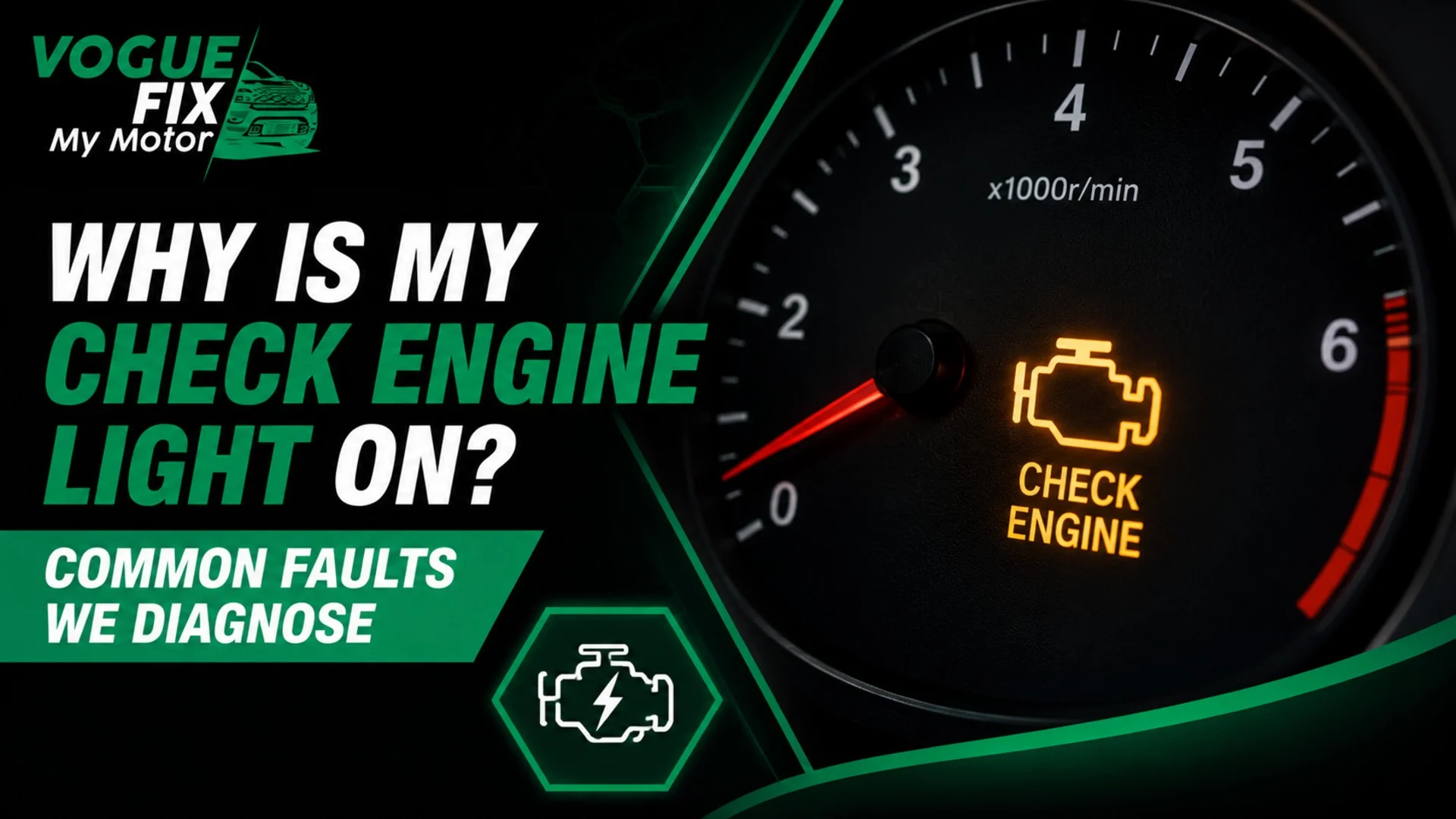
Why Is My Check Engine Light On? Common Faults We Diagnose
This is, by a wide margin, the question we get asked most. And it's a fair one — the check engine light doesn't tell you anything specific on its own. It's just a signal that the ECU has detected something worth flagging.
What Does the Engine Warning Light Actually Mean?
The engine warning light (sometimes called the engine management light) illuminates when the ECU detects a fault outside expected parameters. It could be something minor, like a loose fuel cap disrupting the emissions system's pressure reading. It could also be something more serious, like a misfire that risks damaging the catalytic converter if left unaddressed.
The only reliable way to know which one you're dealing with is a proper diagnostic scan.
Should I Keep Driving With the Engine Light On?
It depends on how the light is behaving:
Steady, non-flashing light — usually safe to drive short distances, but book a diagnostic check soon
Flashing light — stop as soon as it's safe; this typically indicates an active misfire that can damage the catalytic converter within minutes of continued driving
Light accompanied by reduced power or rough running — get it checked immediately, as the vehicle may have entered limp mode to protect the engine
If you're ever unsure, treat a flashing light as urgent. A steady light gives you more breathing room, but it shouldn't be ignored indefinitely.
Common Causes, Misfires, Sensor Failures & Fuel Trim Issues
Some faults come up again and again across the vehicles we diagnose:
Misfires, usually caused by failing ignition coils, worn spark plugs, or fuel delivery issues
Sensor failures, particularly the oxygen sensor and mass airflow sensor, which affect fuel mixture accuracy
Fuel trim faults, where the ECU is compensating for a lean or rich mixture caused by a vacuum leak or failing sensor
Loose or faulty fuel cap, surprisingly common, and one of the few fixes that costs nothing
Real-world example: a customer brought in a diesel estate with the engine light on and noticeably reduced power. The dashboard suggested a serious engine fault. Our diagnostic scan traced it to a faulty EGR valve, a repair that took under two hours and cost a fraction of what the customer had feared after searching their symptoms online.
Can Diagnostics Detect Transmission or Turbo Faults?
Yes. Diagnostic scanning isn't limited to the engine itself. Transmission control modules log their own fault codes, and turbo-related faults, such as underboost or overboost conditions, show up clearly in a full diagnostic scan. This is exactly why a proper diagnostic test covers more ground than simply checking "the engine."
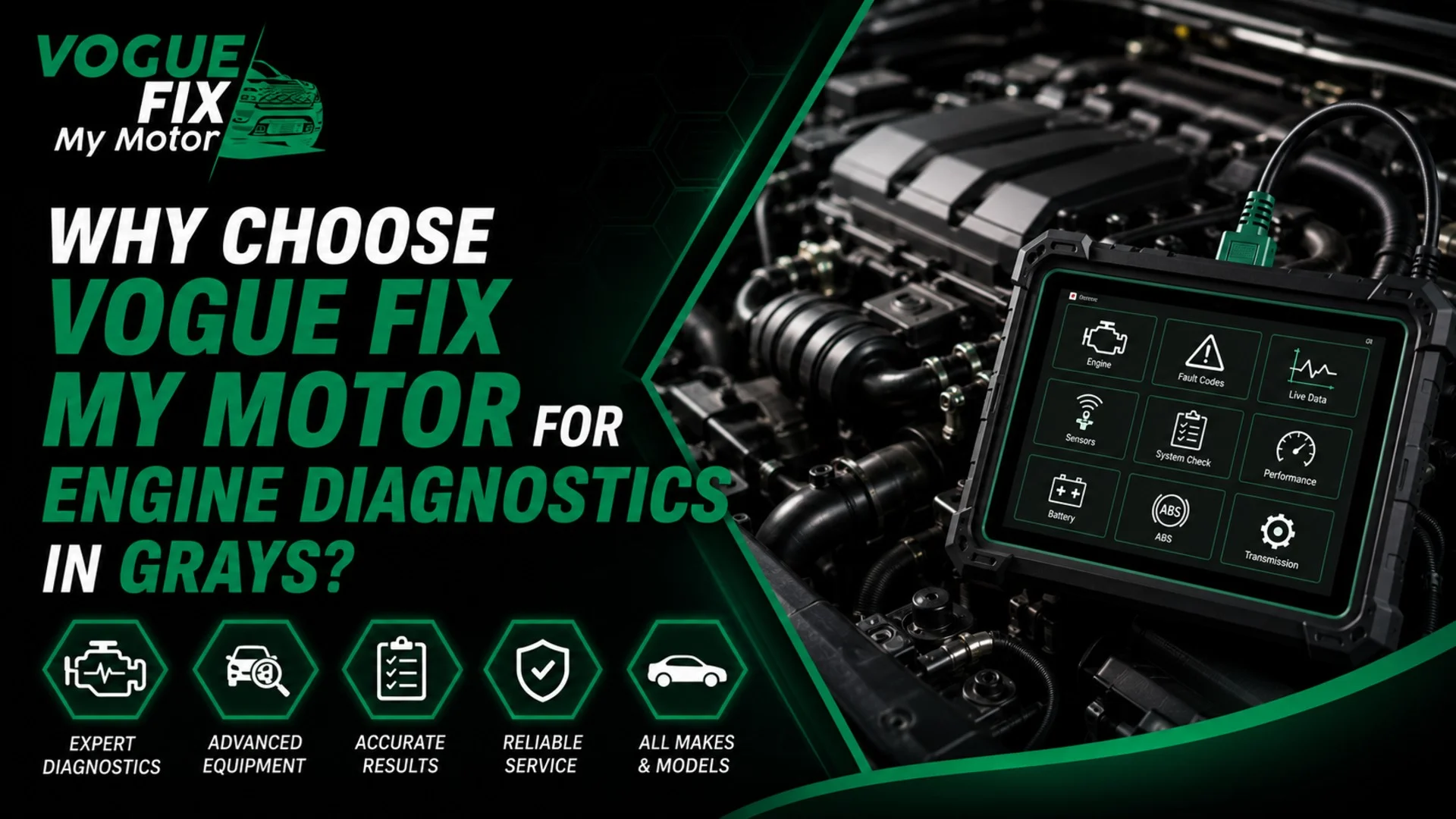
Why Choose Vogue Fix My Motor for Engine Diagnostics in Grays?
Not all diagnostic checks are equal. A basic code reader plugged in for two minutes will give you a fault code and little else. Genuine diagnostic expertise is in interpreting what that code actually means for your specific vehicle.
Advanced Diagnostic Equipment for All Makes
We work with diagnostic software and equipment capable of reading manufacturer-specific fault codes across a wide range of brands, including BMW, Audi, Mercedes-Benz, Land Rover, Ford, Volkswagen, Toyota, Nissan, Kia, Peugeot, Vauxhall, and more. Manufacturer-level diagnostics matter, generic scanners often miss brand-specific codes that a proper system picks up immediately.
Petrol, Diesel & Hybrid Vehicle Diagnostics
Every fuel type brings different diagnostic priorities. Diesel vehicles need close attention to DPF and EGR systems. Petrol engines are more prone to ignition and fuel trim faults. Hybrid vehicles add another layer entirely, with battery management and electric motor systems that require specific diagnostic knowledge. We diagnose all three, using the correct approach for each.
Same-Day Diagnostic Appointments
A warning light rarely appears at a convenient time. That's why we offer same-day engine diagnostics wherever possible, so you're not left driving around uncertain for days while you wait for an appointment slot.
Clear, Honest Diagnostic Reports
You'll get a plain-English explanation of what the scan found, not a code number with no context. We explain what's wrong, what it means for your vehicle, and what your options are, so you can make an informed decision rather than just taking our word for it.
How Much Does Engine Diagnostics Cost in Grays?
Diagnostic pricing depends on the depth of the scan and the vehicle involved, but it's worth thinking about relative to the alternative. Below is a general comparison of how diagnostic costs stack up against the risk of skipping the check:
Approach
Typical Cost
Risk
Professional diagnostic scan
Fixed, upfront quote
Low, fault identified accurately
Guessing and replacing parts
Often higher overall
High, wrong part replaced, issue persists
Ignoring the warning light
£0 short-term
High, risk of catalytic converter or engine damage
Get a fixed diagnostic quote before booking, so you know exactly what you're paying for from the outset.
Book Engine Diagnostics in Grays Today
An illuminated warning light doesn't have to mean an anxious wait or an expensive guess. With the right diagnostic equipment and someone who actually knows how to interpret what it's telling you, most engine faults are identified quickly, explained clearly, and fixed properly the first time.
Whether it's a steady check engine light, a flashing warning, or a vehicle that just doesn't feel right, Vogue Fix My Motor's engine diagnostics service in Grays gives you a clear answer, not a guess.
Book your engine diagnostic appointment in Grays today and find out exactly what your car is trying to tell you.
Frequently Asked Questions, Engine Diagnostics in Grays
How long does an engine diagnostic test take?
Most diagnostic scans take between 30 and 60 minutes, though more complex electrical faults or intermittent issues can take longer to isolate through live data testing.
Do diagnostics clear the fault codes?
A scan can clear stored codes, but clearing a code without fixing the underlying issue means the light will simply return once the ECU detects the fault again. The code needs addressing, not just clearing.
Is engine diagnostics worth it before an MOT?
Yes. A diagnostic scan before your MOT can catch emissions-related faults or warning lights that would otherwise cause a failure, giving you time to fix the issue rather than being caught out on test day.
Do you offer mobile or at-home diagnostics in Grays?
We offer diagnostic appointments designed around convenience, get in touch to discuss options that fit your schedule and location across Grays, Thurrock, and the surrounding Essex area.
Can diagnostics detect battery problems?
Yes. A diagnostic check includes battery voltage and charging system testing, which frequently reveals whether a warning light or starting issue is battery-related rather than engine-related.
What causes engine management lights to come on for no obvious reason?
Even with no noticeable change in how the car drives, the ECU can flag faults from sensors operating slightly outside normal range, these are exactly the kind of early-stage issues a diagnostic scan catches before they develop into bigger problems.