Head Gasket Repair Grays Expert Diagnosis, Repair & Replacement
Steam curling out from under your bonnet on the A13, or a heater that's suddenly blowing cold air, has a way of ruining your whole day. If you've noticed white smoke trailing from your exhaust, a coolant level that keeps dropping with no puddle underneath the car.
Steam curling out from under your bonnet on the A13, or a heater that's suddenly blowing cold air, has a way of ruining your whole day. If you've noticed white smoke trailing from your exhaust, a coolant level that keeps dropping with no puddle underneath the car, or an engine that's running hotter than it used to, you might already suspect what's wrong, a blown head gasket.
It's one of the more serious engine problems you can face, and it's also one of the most misunderstood. Some owners get told it's a simple fix. Others are told the whole engine needs replacing. The truth usually sits somewhere in between, and it depends entirely on how quickly the problem is caught and how it's diagnosed.
This guide covers everything you need to know about head gasket repair in Grays, the warning signs, what actually happens during diagnosis and repair, what it costs, and how to avoid the same failure happening again.
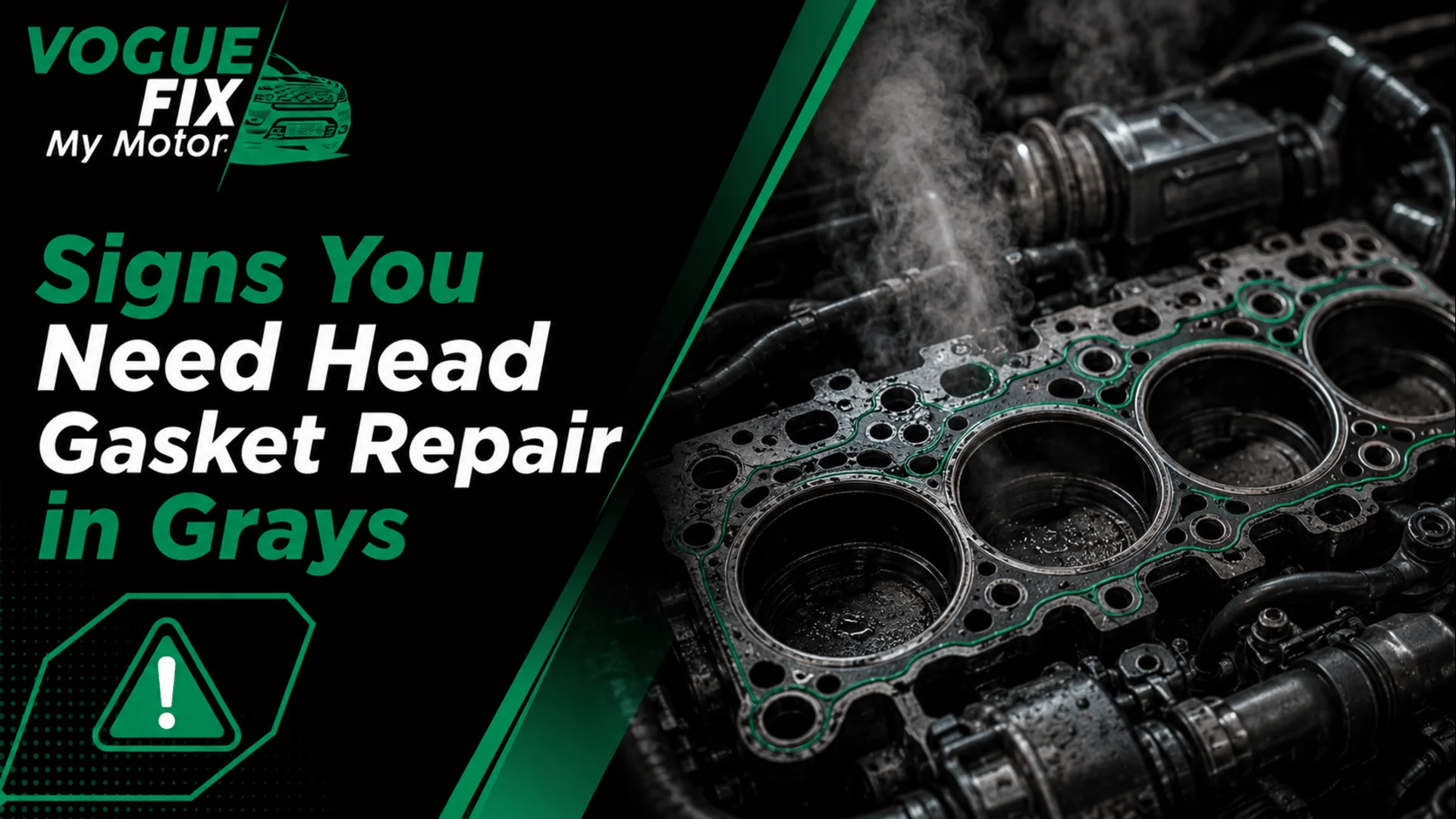
Signs You Need Head Gasket Repair in Grays
A head gasket sits between the cylinder head and the engine block, sealing the combustion chamber and keeping oil, coolant, and combustion gases exactly where they're supposed to be. When it fails, those systems start mixing, and the symptoms are usually hard to miss once you know what you're looking for.
White Smoke from the Exhaust
Thick white smoke, especially if it persists after the engine has warmed up, is one of the clearest head gasket symptoms. This happens when coolant leaks into the combustion chamber and burns off alongside the fuel. A small wisp of vapour on a cold morning is normal, dense, continuous white smoke is not.
Coolant Loss Without a Visible Leak
If you're topping up your coolant reservoir regularly but there's no puddle under the car and no obvious external leak, the coolant is likely going somewhere internal, either into the combustion chamber (and out through the exhaust) or into the engine oil. This is one of the most common reasons drivers in Grays and across Essex end up booking a diagnostic check.
Oil Mixing with Coolant (Milky Oil Cap)
Pull the oil filler cap and check underneath. A pale, mayonnaise-like residue is a strong sign that coolant has made its way into the engine oil, which typically happens when the gasket has failed between an oil and coolant passage. This is a symptom that shouldn't be ignored, since running the engine with contaminated oil accelerates wear on bearings and internal components fast.
Engine Overheating
A gasket failure often shows up as an engine that runs hotter than normal, particularly under load or in traffic. Left unchecked, sustained overheating doesn't just point to a possible gasket problem, it actively makes things worse, since higher temperatures place additional strain on the cylinder head and can lead to warping.
What Causes a Blown Head Gasket?
Understanding the underlying cause helps explain why gaskets fail in the first place, and it's rarely random:
Chronic overheating — the single biggest cause, often from a failing thermostat, low coolant, or a struggling water pump
Age and wear — gaskets degrade over time and higher mileage vehicles are naturally more susceptible
Poor cooling system maintenance — a neglected cooling system (old coolant, a weak radiator, or a failing water pump) puts constant extra stress on the gasket
Warped cylinder head — often a result of prior overheating, which prevents the gasket from sealing properly even after replacement
Incorrect installation — a gasket fitted without correct torque specifications on the head bolts can fail prematurely, even if the part itself was fine
Knowing the root cause matters because simply fitting a new gasket without addressing what caused the failure in the first place often means dealing with the same problem again within months.
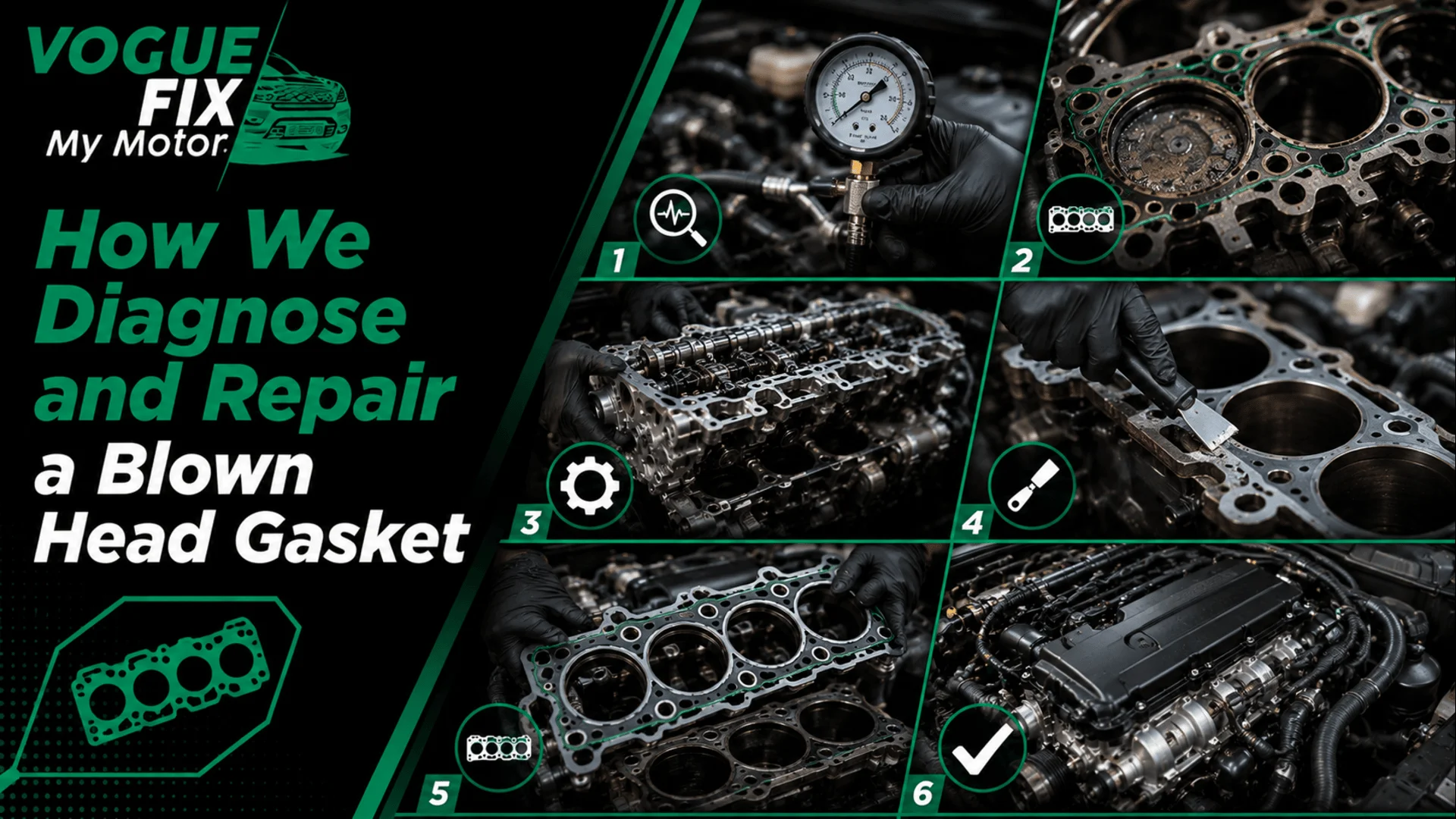
How We Diagnose and Repair a Blown Head Gasket
This is the part most garages skim over, but it's genuinely where the difference between a lasting repair and a repeat failure gets decided.
Pressure Testing Explained
A pressure test involves sealing the cooling system and pressurising it to check for drops in pressure, which indicate a leak somewhere in the system, including, potentially, past the head gasket itself. It's usually the first diagnostic step, since it's quick and non-invasive, and it helps rule out other coolant leak sources like a cracked hose or a failing radiator before assuming the gasket is at fault.
Compression Testing vs Leak-Down Testing
Both tests assess how well each cylinder is sealing, but they work differently and often get used together for a complete picture.
Test
How It Works
What It Reveals
Compression Test
Measures the pressure each cylinder builds during cranking
Identifies weak or underperforming cylinders
Leak-Down Test
Introduces compressed air into the cylinder and measures air loss
Pinpoints exactly where a cylinder is losing pressure, piston rings, valves, or a blown gasket
How Each Test Confirms Head Gasket Failure
A compression test that shows one or two cylinders significantly weaker than the others is often the first red flag. A leak-down test then narrows things down further, if air is escaping into an adjacent cylinder or out through the coolant system, that's strong confirmation of a gasket breach rather than a worn piston or valve issue.
Cylinder Head Inspection & Resurfacing
Once the head is removed, it gets checked for warping, cracks, and surface damage. Even a small amount of warping is enough to prevent a new gasket from sealing properly. Where the head has warped from prior overheating, it gets resurfaced, machined flat again, before a new gasket goes anywhere near it. Skipping this step is one of the most common reasons a fresh head gasket fails again within weeks.
Cooling System Checks
Since overheating is the most common root cause of gasket failure, a genuinely thorough repair doesn't stop at the gasket itself.
Thermostat, Radiator & Water Pump Inspection
A failing thermostat that doesn't open properly, a radiator that's lost cooling efficiency, or a water pump with worn bearings will all continue to cause overheating even after the gasket's been replaced. Checking these components as part of the repair, not as an afterthought, is what actually prevents a repeat failure down the line.
Reassembly and Final Road Testing
Reassembly involves fitting the new gasket and torquing the head bolts to the exact manufacturer specification, usually in a specific sequence and often in stages, since incorrect torque is a well-known cause of early gasket failure. Once reassembled, the cooling system gets bled of air, coolant levels checked, and the vehicle road-tested under real driving conditions to confirm temperatures stay stable and there's no sign of the original symptoms returning.
Why Choose Our Grays Workshop for Head Gasket Repair
Head gasket repair isn't a job to hand to just anyone, it's technical, it's easy to get wrong, and a rushed job tends to come back worse than before.
Warranty on Head Gasket Repairs
A repair backed by a genuine warranty gives you confidence the job's been done properly, not just patched over. Ask any garage exactly what's covered, parts, labour, or both, and for how long, before agreeing to any work.
Areas We Cover Near Grays
We work with drivers across Grays and the surrounding areas, so you don't need to be based right in town to get help.
Thurrock, Tilbury, Purfleet & South Ockendon
If you're based anywhere across Thurrock, including Tilbury, Purfleet, or South Ockendon, our Grays workshop is easily reachable and we regularly work with vehicles from across this whole area.
Stanford-le-Hope, Basildon & Brentwood
We also see plenty of customers travelling in from Stanford-le-Hope, Basildon, and Brentwood, if a local specialist near you doesn't have the right diagnostic equipment on hand, it's often worth the short drive for a proper job.
Preventing Repeat Head Gasket Failure
A few habits go a long way toward avoiding a second failure down the line:
Address any overheating immediately rather than "seeing how it goes"
Keep an eye on coolant levels and top up with the correct specification, not just whatever's on hand
Replace the thermostat and check the water pump if either shows early signs of wear
Have the cooling system flushed periodically rather than leaving old coolant in indefinitely
Get any dashboard temperature warning checked the same day it appears, not weeks later
None of these guarantee a gasket will never fail, but they remove the most common causes, and they're a lot cheaper than a second repair.
Head Gasket Repair Costs & Frequently Asked Questions
How Much Does Head Gasket Repair Cost in Grays?
Costs vary depending on the vehicle, the extent of damage, and whether the cylinder head needs resurfacing or replacing entirely. A straightforward gasket replacement on an engine that hasn't suffered a warped head will cost less than a repair involving head skimming, new head bolts, and additional cooling system components. The most accurate way to know your specific cost is a proper inspection rather than a quote based on guesswork over the phone, every engine and failure is a little different.
Frequently Asked Questions
Can You Drive with a Blown Head Gasket?
Technically, for a very short distance in an emergency, but it's genuinely risky. Continuing to drive on a blown gasket often turns a repairable problem into a much more expensive one, including warped heads or serious engine damage from overheating.
How Long Does Head Gasket Replacement Take?
This depends on the vehicle and what's found during inspection, but most head gasket repairs take a full day or more once you factor in diagnostics, disassembly, any resurfacing work, reassembly, and a proper road test.
Is a Head Gasket Worth Repairing, or Should I Replace the Engine?
In most cases, yes, a head gasket repair is far more cost-effective than an engine replacement, provided the rest of the engine hasn't suffered secondary damage from prolonged overheating. A proper inspection will confirm whether repair is still the sensible option for your specific engine.
Will I Get a Warranty on My Head Gasket Repair?
Reputable garages back their head gasket work with a warranty as standard. Always confirm what's covered and for how long before booking, so you know exactly where you stand if anything doesn't go to plan.
Book Your Head Gasket Inspection Today
If you're seeing any of the symptoms covered here, white smoke, coolant that keeps disappearing, or an engine running hotter than usual, the earlier it's checked, the more likely a straightforward repair will sort it. Waiting rarely makes these problems smaller.
Final Thoughts
A blown head gasket sounds like a worst-case scenario, but with the right diagnosis and a repair that actually addresses the root cause, not just the symptom, it's usually a fixable problem rather than the end of your engine. The details matter here: proper pressure and compression testing, checking the cylinder head for warping, and making sure the cooling system itself isn't what caused the failure in the first place.
If your car's showing any of the warning signs above, get it looked at before a manageable repair turns into a much bigger bill. Get in touch with our team today to book a head gasket inspection, we work with drivers across Grays, Thurrock, and the wider Essex area, and we'll give you a clear, honest picture of what's needed before any work begins.