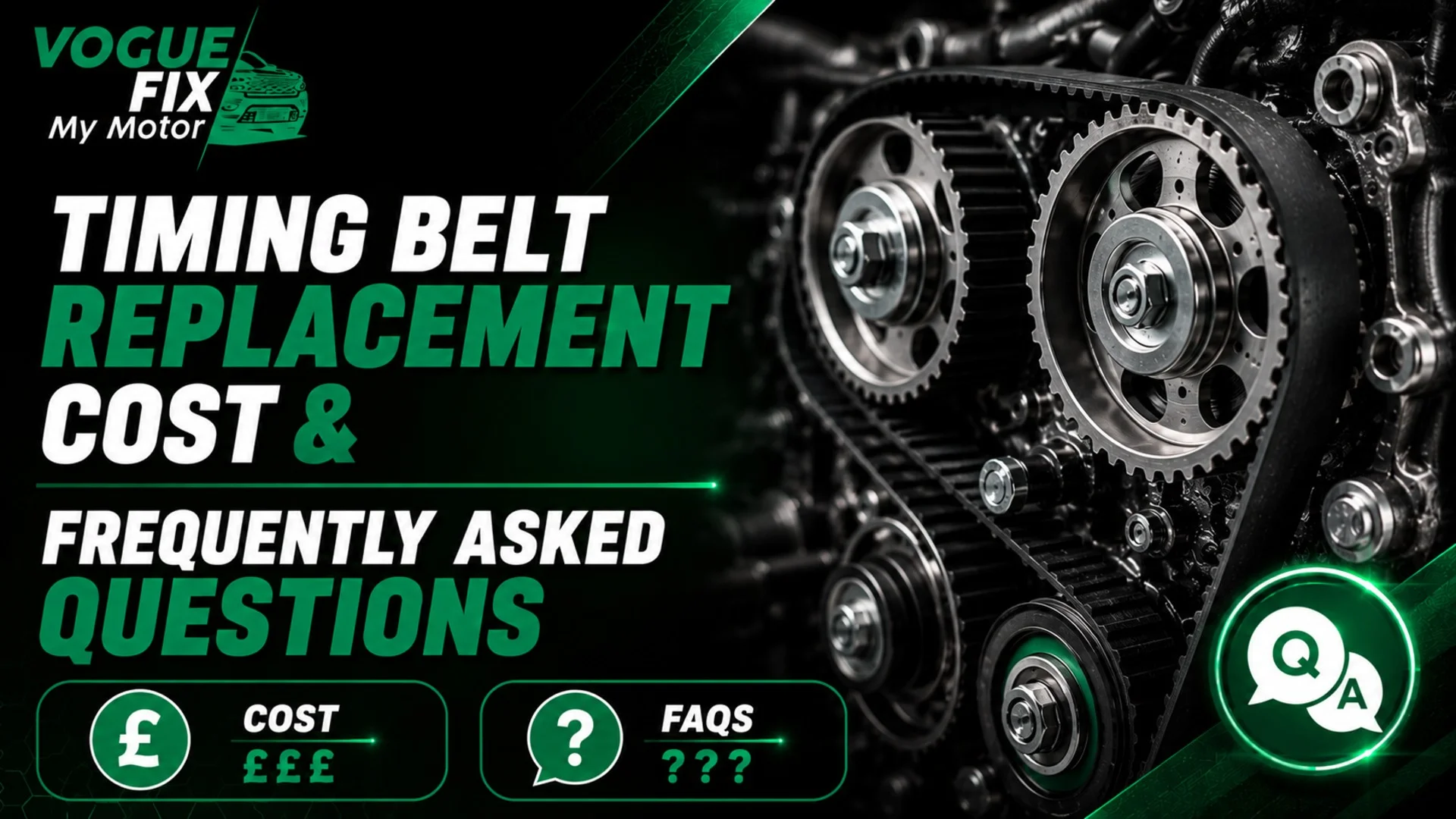
Timing Belt Replacement Grays Expert Cambelt Fitting & Repair
There's a particular kind of dread that comes with a mechanic saying the words "your cambelt's due." It's not a flashy problem like a rattling exhaust or a warning light you can Google in two minutes, it's quieter than that, and a lot more serious.
There's a particular kind of dread that comes with a mechanic saying the words "your cambelt's due." It's not a flashy problem like a rattling exhaust or a warning light you can Google in two minutes, it's quieter than that, and a lot more serious. A worn timing belt doesn't always announce itself before it fails, and when it does fail, the consequences can range from an inconvenient tow to a genuinely expensive engine rebuild.
If you're searching for timing belt replacement in Grays, you've probably either been told it's due, noticed something isn't quite right with your engine, or you're simply trying to stay ahead of a problem before it becomes an emergency. All three are good reasons to be here.
This guide covers exactly what a timing belt does, how to know when yours needs replacing, what the process actually involves, and what it costs, so you're making an informed decision, not just taking someone's word for it.
What Does a Timing Belt Do, And Why Does It Matter?
Before deciding anything about replacement, it helps to understand why this component matters so much in the first place.
What Is Engine Timing?
Engine timing refers to the precise synchronisation between your engine's crankshaft and camshaft. The crankshaft drives the pistons up and down, while the camshaft controls when the valves open and close to let fuel and air in and exhaust gases out. The timing belt (or cambelt, the terms are used interchangeably) is what physically links these two components together, keeping everything moving in exact sync. Get that timing even slightly wrong, and the engine either runs poorly or doesn't run at all.
Timing Belt vs Timing Chain: What's the Difference?
Not every engine uses a belt, some use a timing chain instead, and the distinction matters for maintenance planning.
Feature
Timing Belt
Timing Chain
Material
Rubber, reinforced with fibres
Metal, similar to a bicycle chain
Lifespan
Typically 60,000–100,000 miles
Usually lasts the life of the engine
Maintenance
Requires scheduled replacement
Rarely needs replacing under normal use
Noise level
Quieter running
Can produce a faint rattle, especially when worn
Failure risk
Wears gradually, can snap without warning
Stretches over time, rarely fails suddenly
If your vehicle uses a timing belt, replacing it on schedule isn't optional, it's one of the most important pieces of preventative maintenance you can carry out.
Interference vs Non-Interference Engines
This is one detail most garages don't explain clearly, and it's genuinely important.
Why This Affects the Risk If Your Belt Snaps
In an interference engine, the pistons and valves occupy the same physical space at different points in the engine's cycle, timing is what keeps them from colliding. If the timing belt snaps in an interference engine, the pistons and valves can collide, causing serious internal damage, often bent valves, damaged pistons, and in some cases a written-off engine.
In a non-interference engine, there's enough clearance that a snapped belt typically just stops the engine, inconvenient and requiring a tow, but rarely catastrophic.
The majority of modern petrol and diesel engines are interference designs, which is exactly why timing belt maintenance carries so much more weight than people initially assume.
Signs Your Timing Belt Needs Replacing
A timing belt often gives some warning before it fails completely, though not always. Knowing what to look and listen for gives you a real chance to catch it in time.
Common Timing Belt Symptoms
A ticking or slapping noise from the engine, often more noticeable at idle
Engine misfires or rough running, caused by valve timing drifting out of sync
Difficulty starting the engine, or the engine cranking without firing
Visible wear on the belt itself during a routine inspection, cracking, fraying, or glazing
Oil leaks near the timing cover, which can accelerate belt wear if left unaddressed
What Happens If a Timing Belt Snaps?
On an interference engine, a snapped belt while driving typically means the engine stops immediately and won't restart, often accompanied by significant internal damage discovered once the vehicle is inspected. On a non-interference engine, the outcome is far less severe, usually just a stalled engine and a tow to the nearest garage. Either way, once a belt snaps, you're looking at a repair rather than routine maintenance, which is exactly why replacing it proactively makes far more financial sense.
When Should a Timing Belt Be Replaced?
This is the question every driver actually wants answered, and it depends on more than just a single number.
Manufacturer Replacement Intervals
Every manufacturer sets a recommended replacement interval, typically based on mileage, age, or both, whichever comes first. It's worth checking your specific handbook rather than assuming, since intervals vary considerably between makes and even between different engines from the same manufacturer.
Diesel vs Petrol Timing Belt Maintenance
Diesel engines generally place more mechanical stress on the timing belt due to higher compression, which can mean slightly shorter recommended intervals compared to equivalent petrol engines. It's a detail worth confirming for your specific vehicle rather than assuming diesel and petrol variants share identical schedules.
Timing Belt Replacement for Your Vehicle
Replacement intervals and belt configurations vary by manufacturer, so it's worth knowing roughly where your vehicle falls.
Ford, Volkswagen, Audi & BMW
These manufacturers commonly specify intervals somewhere between 60,000 and 100,000 miles, though this varies significantly by specific engine and model year. Some newer VW Group engines have moved to timing chains entirely, which is another reason confirming your exact engine code matters before booking any work.
Land Rover, Peugeot, Renault & Vauxhall
Similarly, these manufacturers' intervals depend heavily on the specific engine fitted. Land Rover and Range Rover diesel engines in particular are often subject to more demanding maintenance schedules given the loads these vehicles are typically put under.
Why Replace the Water Pump at the Same Time?
This is one of the most valuable pieces of advice a genuinely experienced garage will give you, and it's often skipped by cheaper quotes. On many vehicles, the water pump is driven by the same timing belt and sits in roughly the same difficult-to-access part of the engine. Since most of the labour cost in a timing belt job comes from getting to the belt in the first place, replacing the water pump at the same time adds relatively little extra cost, but avoids paying for that same labour again in a year or two if the water pump fails separately. It's a small additional spend now that avoids a much bigger inconvenience later.
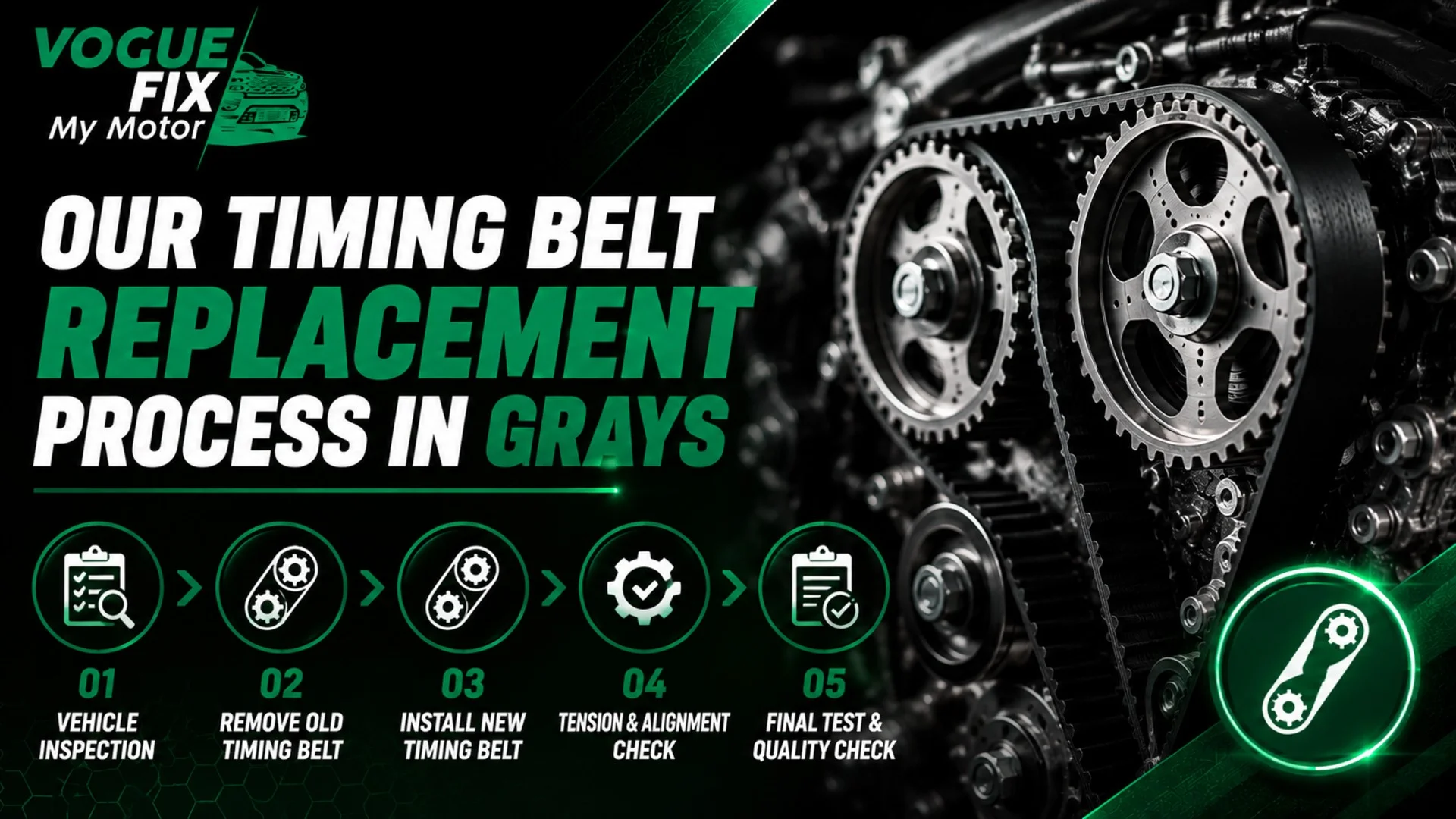
Our Timing Belt Replacement Process in Grays
A timing belt job is precision work, get the timing marks even slightly wrong on reassembly, and you can cause exactly the kind of damage you were trying to prevent.
OEM vs Aftermarket Timing Belt Kits
Not all timing belt kits are equal, and this is worth understanding before agreeing to any quote.
OEM (Original Equipment Manufacturer) kits — built to the exact specification the vehicle manufacturer originally used, generally the safer choice for long-term reliability
Aftermarket kits — can range from genuinely high-quality equivalents to noticeably lower-grade components, so quality varies considerably between suppliers
A cheaper quote built around a lower-grade aftermarket kit isn't necessarily bad value, but it's worth knowing exactly what's included before comparing prices between garages.
The belt tensioner and idler pulleys work alongside the timing belt, keeping correct tension and guiding the belt around its path. These components wear at a similar rate to the belt itself, and replacing the belt without checking or renewing a worn tensioner is one of the more common reasons a "fresh" timing belt job fails prematurely.
Replacement Time and What to Expect
Timing belt replacement is a labour-intensive job, generally taking several hours depending on the vehicle and engine layout, since the timing cover often sits behind other engine components that need removing first. Once the new belt, tensioner, and any related components are fitted, the timing marks are carefully realigned before the engine is turned over and tested.
Warranty on Timing Belt Replacement
A genuine warranty on parts and labour reflects confidence in the job, not just a sales line. Always check exactly what's covered and for how long before booking, so you know where you stand if anything doesn't sound right after the work's done.
Timing Belt Replacement Cost & Frequently Asked Questions
Timing Belt Replacement Cost in Grays
Costs vary depending on your specific vehicle, whether the water pump is being replaced at the same time, and whether OEM or aftermarket parts are used. As a general rule, the labour involved in accessing the timing belt tends to represent a significant portion of the overall cost, which is exactly why bundling in the water pump and tensioner replacement at the same time makes financial sense. The most accurate way to get a genuine figure for your car is a proper quote based on your specific make, model, and engine, rather than a generic estimate that doesn't account for your vehicle's particular setup.
Areas We Cover Near Grays
We work with drivers from across Grays and the wider Thurrock area, so you don't need to be based right on our doorstep to get help.
Thurrock, Chafford Hundred, Aveley & Tilbury
If you're based anywhere across Thurrock, including Chafford Hundred, Aveley, or Tilbury, our Grays garage is easily reachable for timing belt replacement, servicing, or any related engine work.
South Ockendon & Lakeside
We also regularly see customers travelling in from South Ockendon and the Lakeside area, if your local garage doesn't have a slot free or the right parts in stock, it's often worth the short journey to get the job done properly.
Frequently Asked Questions
How Long Does Timing Belt Replacement Take?
Most timing belt replacements take several hours to complete properly, factoring in access to the timing cover, fitting the new belt and tensioner, and carefully realigning the timing marks before testing. Rushing this job isn't something worth risking.
Can I Drive with a Worn Timing Belt?
Technically yes, in the short term, but it's a genuine gamble. A worn belt can fail without much additional warning, and on an interference engine, that failure can mean serious engine damage rather than a simple repair.
How Many Miles Does a Timing Belt Last?
This depends entirely on your specific vehicle and manufacturer, typically somewhere between 60,000 and 100,000 miles, though age also plays a role even on lower-mileage vehicles since the rubber degrades over time regardless of use.
Is Timing Belt Replacement Covered Under Warranty?
Reputable garages back their timing belt work with a warranty on parts and labour. Always confirm the exact terms before booking, so there's no ambiguity if a problem develops after the work's completed.
Book Your Timing Belt Replacement Today
If your vehicle is approaching its manufacturer's recommended interval, or you've noticed any of the warning signs covered above, it's worth booking an inspection sooner rather than later. A timing belt replaced on schedule is routine maintenance, one that's failed is an entirely different, more expensive conversation.
Final Thoughts
A timing belt is one of those components that's easy to forget about right up until it becomes the only thing you can think about. The good news is that it's entirely predictable maintenance, manufacturers publish clear intervals, the warning signs are recognisable if you know what to look for, and a proper replacement (ideally alongside the water pump and tensioner) will keep your engine running exactly as it should for years to come.
If you're due a timing belt replacement, driving a vehicle with a known interference engine, or simply want peace of mind that everything's in good order, get in touch with our team today. We work with drivers across Grays, Thurrock, and the surrounding Essex area, and we'll give you a clear, honest quote based on your exact vehicle before any work begins.